
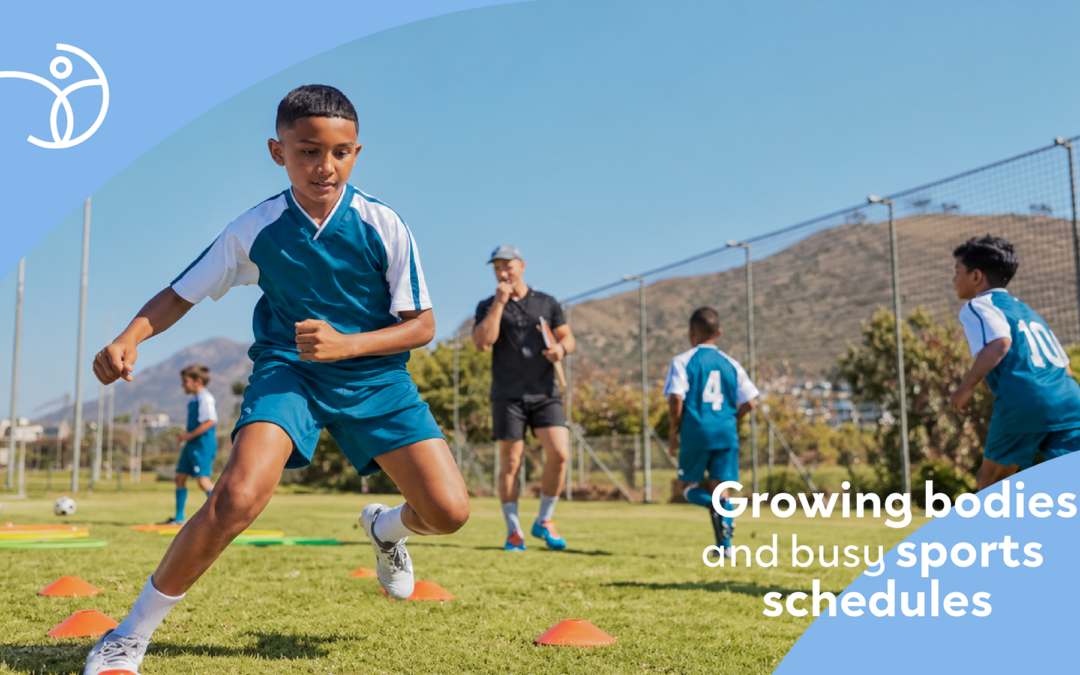
The school term starts and suddenly your child’s calendar is full again, with hockey practice, soccer training, athletics, tennis, a match on Saturday and perhaps club sport somewhere in between. They may also have returned from the holidays noticeably taller than when they left.
Growth spurts, school sport and recurring pain
A few weeks into the term, you hear it: “My knee is sore.” You ask whether they can still play this weekend. The answer is an immediate and very confident yes. There is a match, a tournament or team selection coming up, after all. The pain settles by the next morning, so everyone carries on. Then it happens again after the next practice. Perhaps you notice them rubbing the same knee after a match. Maybe they are limping slightly on the way to the car, or their running suddenly looks different.
When do the normal aches and pains of an active childhood become something worth paying closer attention to? There is no single answer, but understanding what is happening around the pain from school sports injuries in children can tell us far more than the pain alone.
Why can growth and school sport sometimes be a difficult combination?
Children and teenagers are not simply smaller adult athletes. Their bodies are still growing and maturing, and the way they respond to sporting demands changes throughout development. During periods of growth, some areas of the developing skeleton can be particularly sensitive to repeated sporting loads. At the same time, the amount and intensity of activity a child is doing may be changing considerably.
Think about the beginning of a school term. A child may have spent several weeks on holiday with a lighter training schedule and then return to several practices and matches each week. A change of season can introduce a new sport with different physical demands. Some children play school and club sport, while others participate in several sports simultaneously. Add a growth spurt into that mix and there can be a lot for a young body to adapt to at once.
This does not mean growth or sport is a problem. Sport can play an important role in children’s physical development, confidence, friendships and wellbeing. What matters is recognising that growth, training demands, strength and recovery are all part of the same picture.
“My child says they’re fine. How do I know if something is bothering them?”
Children do not always tell us immediately when something hurts. Sometimes they struggle to explain what they are feeling. At other times, particularly when children get older and sport becomes more competitive, admitting that something hurts can feel risky. They may worry that speaking up means missing a match, losing their place in the team or sitting out a tournament they have trained hard for.
Parents may therefore notice a change before hearing a clear complaint. Perhaps your child is limping after training, repeatedly rubbing the same knee, heel or ankle, or moving differently during sport. You might notice them avoiding a particular movement or hear the same complaint after several training sessions. None of these observations automatically means there is an injury, but they can help you recognise when something has changed.
“The pain goes away overnight. Does that mean it’s okay?”
A single ache after a particularly busy day does not necessarily mean there is a problem. One of the more useful things parents can look for is whether a pattern is beginning to emerge. A child may initially complain about pain after a match, only for it to disappear overnight. Over time, however, the discomfort may begin to last longer after activity, occur more frequently or appear earlier during training.
Pain that repeatedly occurs with the same activity, becomes more persistent or begins affecting how a child moves or participates deserves more attention than an isolated complaint that settles and does not return. Rather than focusing only on whether the pain has disappeared by the following morning, consider whether the same problem keeps coming back.
“Are we asking too much of them?”
This can be a difficult question, particularly when a child loves their sport. School sport can become demanding, with some children training and competing across several disciplines at both school and club level. As they get older, there may also be increasing pressure to perform, make teams, attend tournaments and keep up with their peers.
More sport is not automatically a problem, and there is no single amount of activity that is right for every child. What matters is the relationship between the demands being placed on that individual child and their ability to adapt and recover. A sudden increase in training, the addition of another sport or a return to intensive activity after a period of reduced training can all be relevant when considering school sports injuries in children. In some circumstances, temporarily adjusting the sporting load may help the body adapt.
Do kids need to stop playing sport?
Not necessarily. There is a large space between ignoring pain and stopping every form of activity. Depending on what is causing the symptoms, a child may be able to continue participating with adjustments to their sporting load. These might include temporarily reducing training, allowing more recovery, modifying a strength programme or prioritising one sport while symptoms settle. The appropriate approach will depend on the individual child and what is identified during their assessment.
This matters because sport is rarely just sport to a child. It may be where their friends are, something they have worked hard at or an important source of confidence and belonging. Removing a young athlete from sport unnecessarily can have consequences beyond their physical activity, just as continuing to train through a significant problem can have consequences for their health. The aim is to understand what is happening and identify an appropriate way forward that considers both their physical well-being and the importance of sport in their life.
“Their knee hurts. Why is the physio looking somewhere else?”
Where a child feels pain is an important part of the story, but it does not always give us the whole answer. This is why a physiotherapy assessment may include areas above and below the painful region. Depending on their presentation, a child complaining of knee pain, for example, may also need their hip, ankle and overall movement to be assessed.
The assessment of school sports injuries in children also considers the circumstances surrounding the pain. A physiotherapist may explore:
- Growth and development: Has your child experienced a recent growth spurt?
- Sporting demands: Has their training schedule changed, or are they participating in several sports?
- Symptoms: When does the pain occur, and how long does it last?
- Movement and function: Have you noticed changes in the way your child moves or performs during sport?
Parents can often provide valuable information that their children may not recognise as relevant. You may have noticed that their school shoes suddenly no longer fit, their trousers have become too short or their sporting schedule has become considerably busier. These observations can help a physiotherapist understand what may have changed.
At Lamberti Physiotherapy, an assessment is not simply about identifying the painful area and treating it. We want to understand the young person, the demands being placed on their developing body and the factors that may be contributing to their symptoms.
“When should I get pain checked?”
Being proactive does not mean looking for problems in healthy children or taking every post-match ache to a physiotherapist. It also does not mean waiting until your child physically cannot participate. If the same complaint keeps returning after training or matches, pain is becoming more frequent or lasting longer, or your child has begun limping or changing the way they move, it may be worth having the problem assessed.
There are also situations where medical appointments should not wait. Seek appropriate medical assessment if your child experiences significant trauma, severe pain, obvious deformity or substantial swelling, is unable to bear weight normally, or has pain accompanied by symptoms such as fever.
For recurring symptoms that sit somewhere between an occasional ache and an inability to participate, an assessment can help establish what may be contributing to the problem and whether changes to activity, rehabilitation or further medical investigation are needed.
Growing bodies need time to adapt
Children and teenagers are remarkably capable and resilient. Growing bodies are not inherently fragile, and every ache does not indicate an injury. However, children also need to feel comfortable speaking up when something does not feel right, particularly when they are worried that doing so might mean missing out on sport.
As a parent, you do not need to panic at every sore knee or tired leg. What you can do is pay attention to the bigger picture. Consider how much your child is doing, whether their sporting demands have changed, how well they are recovering and whether a complaint that initially seemed occasional is becoming more frequent. Sometimes symptoms settle without intervention. At other times, a temporary adjustment to activity or a professional assessment may help your child continue participating safely and confidently.
Pay attention to the pattern, not only the pain.
If something keeps getting in the way of the activities your child enjoys, Lamberti Physiotherapy can help you understand what may be contributing and what the next step could look like.
Contact your nearest Lamberti Physiotherapy practice to arrange an assessment, or follow us on social media (see the links below) for more practical guidance on movement, recovery and staying active.
Follow us on social media:
REQUEST A TREATMENT
Complete the form below and we’ll contact you to set date and time