Your teenager’s bones are still developing: Why these years matter
When we think about bone health, many of us think about later life. We think about osteoporosis, fractures, ageing and the importance of staying strong as we get older.
What we may not think about quite as often is where that bone strength begins.
Childhood and adolescence are particularly important periods for bone development. During these years, the skeleton is not simply getting longer as a child grows taller. Bones are living tissue, continually changing and adapting, with significant amounts of bone being built during childhood and adolescence. Bone development continues into early adulthood, but the foundations are laid much earlier.
Looking after bone health in teenagers is therefore not something that suddenly becomes relevant later in life.
What is happening to bones during adolescence?
The teenage years can bring remarkable physical changes. Arms and legs get longer, body proportions change, muscle strength develops and the skeleton continues to mature.
Development does not happen according to one universal timetable. Two teenagers of the same age can be at very different stages of physical maturation, and changes in height, strength, coordination and physical capacity do not necessarily happen at exactly the same time.
This can sometimes be noticeable in movement. A teenager who previously seemed very coordinated may temporarily move differently as their proportions change. Their sporting performance may fluctuate too. These changes do not automatically mean something is wrong; they can be part of a body adapting through a period of considerable development.
Genetics and biological maturation play significant roles in bone development, so this is not something parents can or need to control perfectly. Movement, nutrition and other lifestyle factors can, however, help support healthy bone development during these years.
Why does movement matter for developing bones?
Bones respond to the demands placed on them.
Weight-bearing activities and resistance activities place mechanical demands on the skeleton that can support bone health in teenagers. Running, jumping, dancing and many field and court sports provide this kind of loading naturally. Resistance training can also contribute to muscular and skeletal health when it is appropriate for the young person and performed with suitable technique and supervision.
This does not mean every teenager needs to be an athlete.
A teenager who has no interest in competitive sport can still have an active life. Walking, running, dancing, recreational sport, jumping and age-appropriate strengthening activities can all provide opportunities for bones and muscles to experience load.
Movement matters, and there are many ways to move.
“Will strength training stunt my teenager’s growth?”
This is a concern that still comes up for many parents, but current evidence does not support the idea that appropriately designed resistance training stunts a young person’s growth.
Well-designed resistance-training programmes have not been shown to negatively affect linear growth or growth-plate health. Appropriate technique, gradual progression and suitable supervision are important, particularly as the type and intensity of training become more advanced.
Strength training for a teenager does not need to mean heavy weightlifting or an adult bodybuilding programme either. Resistance can come from body weight, resistance bands, free weights and other appropriately selected exercises.
The focus should be on developing good movement and strength progressively, with the programme matched to the individual young person and their level of development.
“They suddenly seem less coordinated. Is something wrong?”
Adolescence is not a smooth, predictable progression from a smaller body into a bigger one.
Young people grow and mature at different rates. During periods of rapid development, changes in body size and proportions can coincide with changes in strength, coordination and sporting performance. These physical qualities do not necessarily develop at the same rate.
This is also why comparing one teenager with another of the same age can be misleading. Chronological age does not tell us exactly where an individual young person is in their physical development.
A temporary change in coordination or performance does not necessarily mean something is wrong. Persistent pain, recurring symptoms or changes that begin interfering with movement and participation, however, deserve closer attention.
“Is playing sport enough?”
Sport can provide excellent opportunities for movement, strength, coordination and healthy bone loading. Many sports naturally include running, jumping and changes of direction that challenge developing bones and muscles.
More sport is not automatically better.
A teenager may be playing for their school, training with a club and participating in more than one sport, all while managing schoolwork, friendships and everyday life. A new sports season or return from the holidays can also mean that training demands increase quite suddenly.
The question is not simply how much sport they do. It is whether their training demands, recovery and individual development are working together.
Growing bodies need opportunities to adapt. Adequate recovery matters, as does recognising when a teenager’s sporting schedule has become particularly demanding or when recurring pain and changes in movement suggest that something may need attention.
What about nutrition?
Movement is only one part of healthy bone development.
Growing, active bodies also need enough energy and nutrients to support both development and activity. Calcium and vitamin D play important roles in skeletal health, while inadequate energy intake can negatively affect bone health, particularly in highly active young people.
This does not mean every teenager needs supplements or a highly specialised diet. Where there are concerns about nutrition, dietary intake or possible deficiencies, these are best discussed with an appropriately qualified healthcare professional.
The important point is that a growing body needs to be adequately fuelled for both growth and activity.
Bone health is about more than avoiding injury
It is easy to start thinking about children’s bones only when something hurts or gets injured. There is a bigger picture.
Adolescence is an opportunity for young people to develop strength, movement skills and confidence in what their bodies can do. The movement habits developed during these years can also become part of an active life into adulthood. This does not require teenagers to train perfectly, eat perfectly or become competitive athletes. Bone health should not become another source of pressure during an already complicated stage of life.
Growing bodies are not inherently fragile bodies. They are developing bodies that need opportunities to move, strengthen, recover and adapt.
Where does physiotherapy fit in?
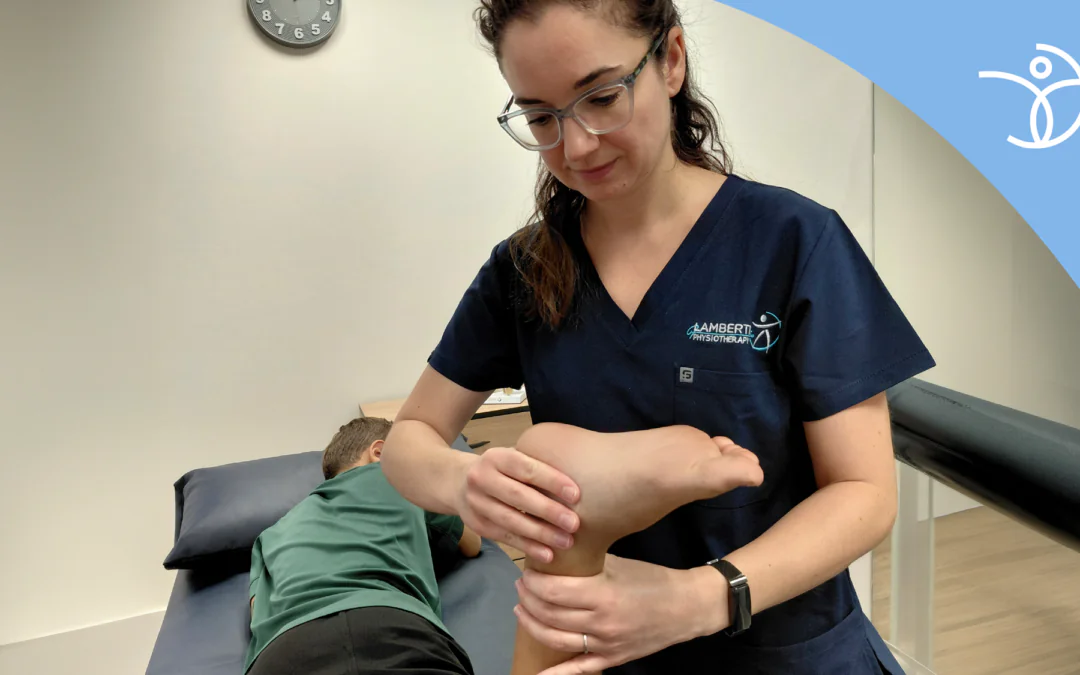
A healthy teenager does not need physiotherapy simply because they are growing. Physiotherapy can be useful when pain, injury, recurring symptoms or changes in movement begin getting in the way of activity. It can also form part of rehabilitation and a progressive return to sport following an injury.
When we assess a young person at Lamberti Physiotherapy, we consider more than the area that hurts. Their stage of development, activity levels, recent changes in sporting demands, strength, movement and what they want to return to can all help us understand the bigger picture. A sore knee, for example, is not assessed in isolation from the teenager attached to it.
Understanding the person in front of us matters, particularly when that person’s body is still changing.
Building for now and for later
Bone health does not begin with osteoporosis. It begins much earlier, while bones are developing, teenagers are discovering how they like to move and everyday habits are beginning to take shape.
Movement, appropriate strengthening, adequate nutrition and recovery can all help support a developing skeleton. Just as importantly, adolescence is an opportunity to help young people build trust in their bodies rather than teaching them to fear movement or see every ache as evidence that something is wrong.
The goal is not simply stronger bones for later. It is helping young people develop strong, capable bodies that they feel confident using now.
If pain, injury or recurring symptoms are beginning to interfere with your teenager’s movement or activities, contact your nearest Lamberti Physiotherapy practice to discuss whether physiotherapy may be able to help. Follow us on social media (see links below) for more practical guidance on movement, recovery and staying active throughout every stage of life.
Follow us on social media:
REQUEST A TREATMENT
Complete the form below and we’ll contact you to set date and time